

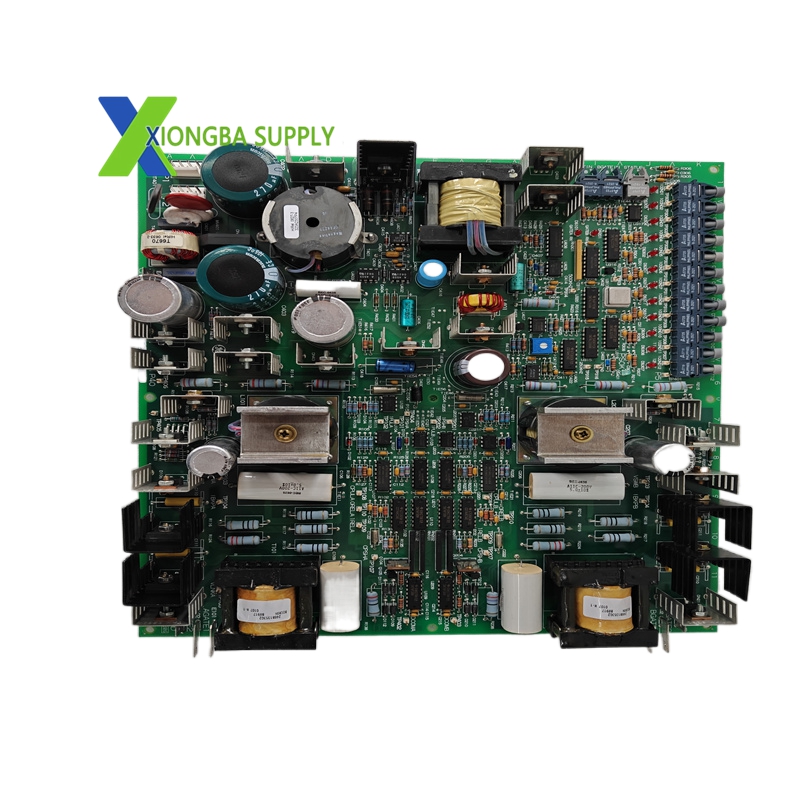
Technical Specifications
- Manufacturer: ABB
- Model: GJR5253100R1260 BCU05G
- Battery Compatibility: 12/24/48 VDC lead-acid, NiCd, Li-ion batteries
- Voltage Monitoring Range: 10–60 VDC
- Current Monitoring Range: 0–50 A (charge/discharge)
- Temperature Monitoring Range: -20°C to +60°C (NTC thermistor)
- Charging Control: Programmable charging voltage/current, float/boost charging modes
- Protection Functions: Overcharge, over-discharge, overcurrent, short circuit, overtemperature, undervoltage
- Communication Port: 1 × RS-485 (Modbus RTU)
- Supported Protocol: Modbus RTU (Slave)
- Power Supply: 24 VDC (±10%)
- Power Consumption: Max 8 W
- Dimensions (L×W×H): 180 mm × 120 mm × 60 mm
- Weight: 1.5 kg
- Operating Temperature: -10°C to +55°C
- Storage Temperature: -40°C to +70°C
- Relative Humidity: 10%–90% (non-condensing)
- Certifications: CE, UL, CSA, IEC 62040
Key Features
-
Comprehensive Battery Management
- Monitors battery voltage, charge/discharge current, and temperature in real time.
- Programmable charging parameters (voltage/current) and support for float/boost charging modes optimize battery performance and lifespan.
-
Multi-Level Protection Functions
- Overcharge, over-discharge, overcurrent, short circuit, overtemperature, and undervoltage protection safeguard the battery from damage.
- Automatic shutdown and fault alarm features prevent catastrophic battery failure.
-
Real-Time Monitoring & Diagnostics
- LCD display and LED indicators provide real-time status of battery parameters and fault conditions.
- On-board diagnostics log fault history and support remote monitoring via Modbus RTU.
-
Modbus RTU Communication
- RS-485 port supports Modbus RTU protocol for seamless integration with SCADA, DCS, and battery management systems (BMS).
- Enables remote monitoring, configuration, and firmware updates.
-
Compact & Rugged Design
- Compact form factor (180×120×60 mm) for easy installation in battery cabinets or control rooms.
- Industrial-grade components and heavy-duty housing withstand harsh environmental conditions.
Application Scenarios
- Power Generation
- Backup power systems in thermal, hydro, and nuclear power plants.
- Battery systems for turbine control systems and emergency lighting.
- Data Centers
- UPS battery systems for data centers and server rooms.
- Monitoring and protection of lithium-ion and lead-acid battery banks.
- Industrial Automation
- Backup power for PLCs, SCADA, and critical industrial control systems.
- Telecommunications
- Telecom tower battery backup systems and base station power supplies.
- Renewable Energy
- Solar and wind power battery energy storage systems (BESS).
- Marine & Transportation
- Marine vessel battery systems and railway backup power systems.

There are no reviews yet.